
Health
What Is Sinus Arrhythmia? Causes, Symptoms, Diagnosis, and Is It Life-Threatening?

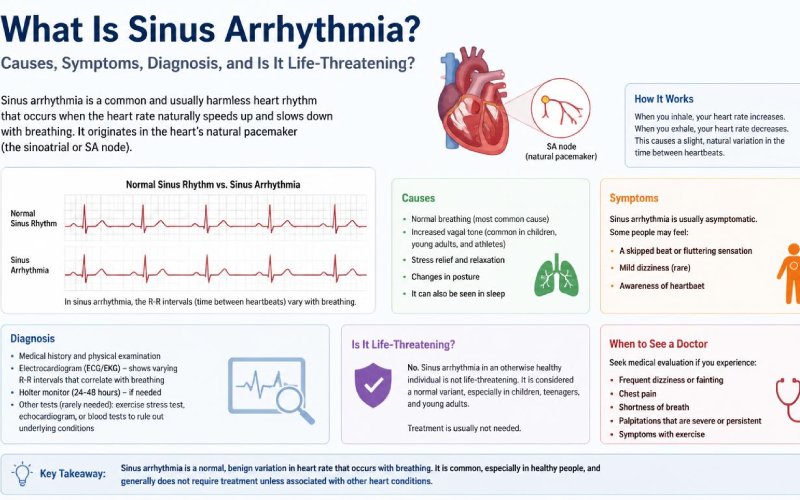
Knowing that you have an “arrhythmia” seems dangerous because this term indicates an irregular heart rhythm. However, not all arrhythmias are concerning; many of them are harmless, and sinus arrhythmias are one of them. It is a natural variation in the heart’s rhythm, generally occurring in healthy kids, teenagers, and adults. Generally, it is discovered through a routine electrocardiogram (ECG) and doesn’t cause any symptoms or health problems. In today’s article, we will understand what sinus arrhythmia is, the primary reasons behind its occurrence, when you should consult with a doctor, and more, so keep reading.
Also Read : Heart Hypokinesis Explained: Causes, Symptoms, Serious Implications, and Treatment Options
What Is Sinus Arrhythmia?
Sinus arrhythmia refers to a variation in the timing of your heartbeat that originates from the sinus node. It is not similar to other arrhythmias because the heart rhythm remains normal in origin; only the time between beats changes.
Its most common form is:
- Heart rate increases slightly during inhalation.
- The heart rate slows slightly during exhalation.
Is Sinus Arrhythmia Life-Threatening?
Usually, no, and it is often considered a sign of a healthy, responsive autonomic nervous system.
It usually:
- Does not damage the heart.
- Does not increase heart disease risk.
- Does not require treatment.
- Does not shorten life expectancy.
However, further evaluation becomes necessary when an irregular heart rhythm is caused by another underlying heart condition instead of normal sinus arrhythmias.
What Causes Sinus Arrhythmia?
In this section, we are listing some of the most common causes behind sinus arrhythmias:
- Age
- Physical fitness
- Relaxation
- Sleep
- Certain medications
- Underlying heart disease (in some non-respiratory cases)
To find its exact cause, you should visit a healthcare professional for more details and precise findings.
Common Symptoms
Most people face no symptoms of sinus arrhythmias. If symptoms are present, they are likely to indicate some other medical condition instead of sinus arrhythmias.
Some people may experience:
- Awareness of their heartbeat (palpitations)
- Mild dizziness
- Fatigue
- Lightheadedness
How Is Sinus Arrhythmia Diagnosed?
Sinus arrhythmias are commonly diagnosed using methods like:
- Electrocardiogram (ECG or EKG)
- Physical examination
- Medical history
- Heart rhythm monitoring (such as a Holter monitor, if needed)
These tests are necessary to distinguish sinus arrhythmias from other serious rhythm disorders.
Does Sinus Arrhythmia Need Treatment?
For a healthy individual, there is no requirement for any treatment for sinus arrhythmias. Treatment may become necessary when, in medical tests, it is found that some other condition is responsible for the abnormal heart rhythm.
When Should You See a Doctor?
You should consider visiting a doctor if you experience:
- Chest pain
- Shortness of breath
- Fainting
- Frequent dizziness
- Persistent palpitations
- A family history of serious heart rhythm disorders or sudden cardiac death
In such a condition, you should immediately seek medical attention.
Can You Live a Normal Life With Sinus Arrhythmia?
Absolutely, a person with sinus arrhythmias can:
- Exercise safely
- Participate in sports (if otherwise healthy)
- Work normally
- Travel
- Carry out daily activities without restrictions
Just make sure to follow a healthy routine carefully crafted by a healthcare expert.
Tips for Maintaining Heart Health
These are some general health tips for better heart health; you should follow them consistently:
- Exercising regularly
- Eating a balanced diet
- Avoiding tobacco products
- Managing stress
- Getting adequate sleep
- Attending regular medical checkups
- Following treatment plans for high blood pressure, diabetes, or other chronic conditions
These habits are beneficial in all heart health conditions.
Frequently Asked Questions (FAQs)
Is Sinus Arrhythmia Dangerous?
No, sinus arrhythmia is generally not considered dangerous and is common in healthy individuals.
Can Sinus Arrhythmia Go Away?
It is a normal physiological finding, which may become less noticeable with age. However, it doesn’t require any treatment.
Should I Avoid Exercise if I Have Sinus Arrhythmia?
You should selectively choose what type of exercise you do. It shouldn’t cause any chest pain, fainting, severe palpitations, or other concerning symptoms.
Conclusion
Sinus arrhythmias are one of the most common and harmless variations in heart rhythm. It is not a concerning situation and doesn’t require any treatment. Sinus arrhythmias become less noticeable with age and can easily be managed by following a healthy routine. In today’s article, we discussed this topic in detail and shared relevant information with you. In the end, we hope you enjoy reading this post and find it informative. If so, then do share this post with others as well.

Kinky Cubes is an intimacy product, marketed around couples who want to explore something different. Generally, products marketed around couples promise to add something unique, but it is not necessary that they are worth trying. Kinky Cubes are gummies; whether they are worth it or not primarily depends on factors like ingredients, intended effects, individual expectations, safety considerations, and more.
In this article, we will explore details around Kinky Cubes, so keep reading.
What Are Kinky Cubes?
Kinky Cubes are special types of gummies designed for couples and adults interested in elevating their intimacy experience. They are different from ordinary gummies and marketed around specific effects, which makes it important to refer to their ingredient list, recommended serving, manufacturer information, and claims.
What Are They Supposed to Do?
The primary goal of Kinky Cubes is to enhance the intimacy experience, mood, and sexual wellness. These are their primary marketing objectives, but their ultimate results may vary from person to person, depending on factors like age, medications, general health, stress, sleep, expectations, and more.
Ingredients Matter
Checking ingredients is the most basic thing you should do when purchasing Kinky Cubes.
Look for:
- The complete list of active ingredients
- The amount of each ingredient per serving
- Recommended serving size
- Allergens
- Other inactive ingredients
- Manufacturer information
- Warnings and usage instructions
This step is crucial to ensure your safety and to understand what you will consume in the name of Kinky Cubes. It is also helpful in determining the possible effects on your body.
Are Kinky Cubes Effective?
Whether Kinky Cubes are effective or not depends on several factors. There is no universal answer for all. It is a product designed to elevate mood, energy, sexual desire, and physical response, and it won’t affect everyone the same. However, companies may claim super benefits of using this product based on a few or single ingredients. Still, you have to check the cumulative effect of all ingredients and their formulation before deciding to consume them.
Are Kinky Cubes Safe?
Generally, products like Kinky Cubes are not considered safe because they are artificial products meant to elevate a natural feeling that should generate naturally in your body. Taking products like Kinky Cubes is like changing your body. You technically behave/perform beyond your limits, which is not considered healthy and safe.
Also, if you still want to consume them, then you should definitely consult a well-qualified and experienced doctor before starting to take them.
What Should You Consider Before Buying?
Before you decide whether you should buy Kinky Cubes or not, you should ask yourself these five questions:
- What exactly is in the product?
- Are the claims realistic?
- Do you need the product?
- Could it interact with something you already take?
- What is the reason behind why I am considering buying it?
Answering these questions will help you make an informed decision.
Frequently Asked Questions (FAQs)
Are Kinky Cubes Designed for Women?
Kinky Cubes are marketed as a couple’s product, designed to elevate sexual desires and improve performance. Generally, they also include women, but you should read the description to better understand the user base.
Do Kinky Cubes Guarantee a Specific Effect?
No, Kinky Cubes are a mere supplement. They don’t guarantee any specific effect because human bodies are different, and these types of products don’t have the same impact on all people.
Should I Check the Ingredients Before Using Kinky Cubes?
Absolutely, you should definitely check ingredient lists before using any product, especially with products like Kinky Cubes; you should be extra cautious.
Conclusion
Kinky Cubes is a specific type of gummy designed to improve your sexual performance and bring uniqueness to intimacy. These types of products target your vulnerabilities and want to exploit them. They target the couple’s weak areas and try to monetize them. In this article, we discussed Kinky Cubes in detail and shared relevant information with you. In the end, we hope you enjoy reading this post and find it informative. If so, then do share this post with others as well.
Managing healthcare staff is a complex task. It is not limited to providing them with a weekly timetable. There are several things to take care of, such as patient demand, employee availability, skill requirements, overtime, open shifts, and more. To solve such problems, many advanced digital solutions are present in the market, and Smart Square HMH is one of them. This term refers to Hackensack Meridian Health’s use of Smart Square. In this article, we will discuss it in detail, so keep reading.
What Is Smart Square HMH?
Smart Square is primarily known as healthcare workforce management software developed for organizations that require advanced employee-management solutions. Hackensack Meridian Health adopted the platform to resolve issues related to workforce management across its healthcare operations.
Why Healthcare Workforce Management Is Difficult
Healthcare staffing is different from handling employees in a non-medical organization. It involves several unique challenges, such as patient volumes changing at any time, healthcare departments needing skilled staff, one employee generally not being able to work in other departments, and more.
To resolve these issues, hospitals usually follow these techniques:
Predictive Scheduling
Predictive scheduling can be done using digital tools that can forecast patient volume and staffing requirements up to 120 days in advance. It is a unique Smart Square feature. This feature helps hospitals follow a proactive approach, instead of a reactive one, which allows them to arrange staff in advance before potential shortages happen.
Open Shift Management
Open shifts are about helping organizations fill staffing gaps. This tool helps you communicate and manage available shifts to fill a significant portion initially, reducing last-minute staffing decisions. It is also beneficial for employees; they can see the available shifts and ask their managers to allow them as per their requirements.
Enterprise Workforce Visibility
If every department of the organization starts working in isolation, then managing the staffing requirements would become extremely difficult. Smart Square provides a centralized workforce view that allows leaders to check staffing availability across departments and make arrangements accordingly.
HMH’s Measurable Results
Hackensack Meridian Health is an example of successful Smart Square implementation. As per symplr’s published case study, HMH was struggling with FTE leakage, i.e., hours employees were not working despite being allotted full-time-equivalent requirements. After implementing Smart Square solutions, the organization reported a 6.5% reduction in FTE leakage and monetary savings of $616,000 as compared to the previous year.
How Smart Square Can Benefit Healthcare Organizations
The primary advantages of Smart Square are as follows:
- Better visibility into staffing requirements
- More proactive workforce planning
- Easier management of open shifts
- Greater employee control through self-scheduling
- Reduced dependence on last-minute staffing decisions
- Better monitoring of labor utilization
- More informed workforce decisions
These benefits are not automatic; they depend on how an organization implements the system and makes arrangements accordingly.
The Future of Healthcare Workforce Management
The future of healthcare workforce management is data-oriented, which includes using digital devices to predict future demand accurately and make arrangements accordingly. Today’s modern tools are filled with features like forecasting, automation, analytics, self-scheduling, integrations with healthcare systems, and more. These features help hospitals manage their staffing needs and optimal utilization of resources.
Frequently Asked Questions
What is Smart Square HMH?
Smart Square HMH primarily refers to the implementation of Smart Square in Hackensack Meridian Health for managing the healthcare workforce and staff requirements.
Is Smart Square Owned or Developed by Hackensack Meridian Health?
No, as per available details, Smart Square is neither owned nor developed by Hackensack Meridian Health. HMH is a user of this technology.
How Did Smart Square Benefit Hackensack Meridian Health?
As per symplr’s HMH case study, they saved around $616,000 in a year as compared to the previous year due to a 6.5% reduction in FTE.
Conclusion
Smart Square HMH is an example of how you can use modern digital solutions to solve your problems and also save costs due to optimal utilization of resources. In this article, we shared publicly available details with you and requested you to kindly verify all claims and terms and conditions before adopting it. In the end, we hope that you like reading this post and will share it with others as well.

Congestive heart failure is not something which will only get worse, and you can’t overcome this disease. A diagnosis of heart failure can improve with the right treatment and cause improvement in heart functionality.
However, it requires a long-term treatment plan and consistent efforts towards improving heart health. Let’s discuss in detail whether it can be reversed or not, and other details related to this topic, so keep reading.
What Is Congestive Heart Failure?
Heart failure refers to a condition in which the heart cannot pump enough blood to meet the body’s needs. The term “congestive” means fluid buildup due to improper functioning of the heart, which results in fluid collecting in the lungs, legs, ankles, or other body parts. Conditions like coronary artery disease, high blood pressure, heart valve problems, cardiomyopathy, and previous heart damage are among the primary reasons behind heart failure.
Can Heart Failure Be Reversed?
Yes, it can be reversed, but not all forms of heart failure can be reversed; only a few of them can be, when the underlying cause is identified and treated. In general cases, heart damage is permanent. With consistent treatment, it can reduce hospitalization, but complete removal is rare.
What Can Cause Heart Failure to Improve?
- Treating High Blood Pressure: Uncontrolled high blood pressure is directly linked to an increased risk of heart failure; it is important to control it.
- Treating Heart Valve Problems: Some valve disorders affect the heart’s ability to pump or fill properly. To resolve it, an appropriate valve repair or replacement is required.
- Treating Abnormal Heart Rhythms: Consistent rapid heart rhythms can weaken the heart in the long run. It is important to treat them in a timely manner to avoid the risk of negative consequences.
- Treating Coronary Artery Disease: When coronary arteries are blocked or narrowed for any reason, they can reduce blood flow to the heart muscle; that’s why appropriate treatment is required to prevent additional damage and improve heart function.
Can Lifestyle Changes Help?
Absolutely, lifestyle changes are integral to managing heart health. Generally, these changes help patients the most:
- Following a heart-healthy eating pattern
- Limiting sodium when advised
- Maintaining a healthy weight
- Staying physically active at an appropriate level
- Avoiding smoking
- Limiting alcohol
- Taking prescribed medications consistently
- Monitoring symptoms and fluid retention
Medications and Heart Failure
Modern treatments heavily depend on medications. Depending on the type of heart failure, doctors may prescribe medications to reduce strain on the heart, control blood pressure, remove excess fluid, or improve cardiovascular outcomes.
In some people, certain devices are also used to control abnormal rhythms or treat significant structural heart problems.
Can a Weak Heart Become Stronger?
After successful treatment of the underlying heart problem, the first positive outcome is the improvement of heart health or stoppage of further loss. However, it doesn’t mean that you stop the treatment; the underlying condition can return if medications are discontinued. Timely follow-ups are also recommended for better heart health.
When Is Heart Failure an Emergency?
If you are experiencing heart failure with severe difficulty breathing, chest pain, fainting, severe weakness, confusion, or other rapidly worsening symptoms, then instead of waiting for the next doctor’s appointment, you should rush to the hospital seeking emergency medical care.
Frequently Asked Questions (FAQs)
Is Congestive Heart Failure Completely Curable?
Generally, it is not completely curable, but its symptoms can be reduced substantially with the improvement of heart health due to the right treatment.
Can Ejection Fraction Improve After Heart Failure?
Yes, in some cases, significant improvement has been seen after treatment. However, you shouldn’t stop visiting doctors for further health updates.
Can Lifestyle Changes Reverse Heart Failure?
Lifestyle changes are an integral part of heart failure treatment, but alone, they can’t reverse heart failure; medications and other health care services also play a crucial role in the overall treatment.
Conclusion
Congestive heart failure is reversible in some cases with proper treatment, lifestyle changes, healthy diet, and guided exercise. However, even after reversal, you shouldn’t stop visiting the hospital for a checkup. Even a small mistake can turn deadly. Heart health is crucial, and this article discusses an important topic around it. In the end, we hope you enjoy reading this post and find it informative. If so, then do share this post with others as well.


How Developers Can Use Guest Posts to Build Their Professional Presence

Kinky Cubes Review: Are These Couples Gummies Worth Considering?

Staying Updated on the Latest Game Releases and Industry News

Best Kickass Proxy List 2024 – 100% Working to Unblock to Access

Banging The Underdog Incident 2022

TamilRockers Proxy 2025: 20+ Working Links, Mirror Sites & VPN Guide
-
Entertainment2 years ago
Best Kickass Proxy List 2024 – 100% Working to Unblock to Access
-
 Lifestyle2 years ago
Banging The Underdog Incident 2022
-
Entertainment2 years ago
TamilRockers Proxy 2025: 20+ Working Links, Mirror Sites & VPN Guide
-

 Fashion2 years ago
Trendy Midi Dresses for Casual Wear: Hair Care Tips Included!
-
 Entertainment2 years ago
TamilMV Proxy Sites List 2025 – How to Unblock TamilMV Safely?
-

 Piano2 years ago
How Online Piano Lessons Can Enhance Your Musical Skills?
-
 Entertainment2 years ago
Pirate Bay Proxy List 2025: Access The Pirate Bay Safely
-
 Technology2 years ago
SSIS 469 – Detailed Guide to Understand The Features and Benefits