
Health
Gastric Bypass Costs in Colorado: 5 Clinics Compared


What does gastric bypass surgery cost in Colorado in 2025?
Most self-pay patients spend about $16,000–$19,000 at an MBSAQIP-accredited Colorado clinic—several thousand dollars below the national $17,000–$26,000 range.
We’ve pulled 2024–2025 price sheets from five accredited programs, compared exactly what each fee covers, and scored them on cost, quality, and financing. You’ll learn where a $16K quote is a steal, when a $19K package saves money long-term, and which questions to ask before you schedule surgery.
How we compared Colorado clinics
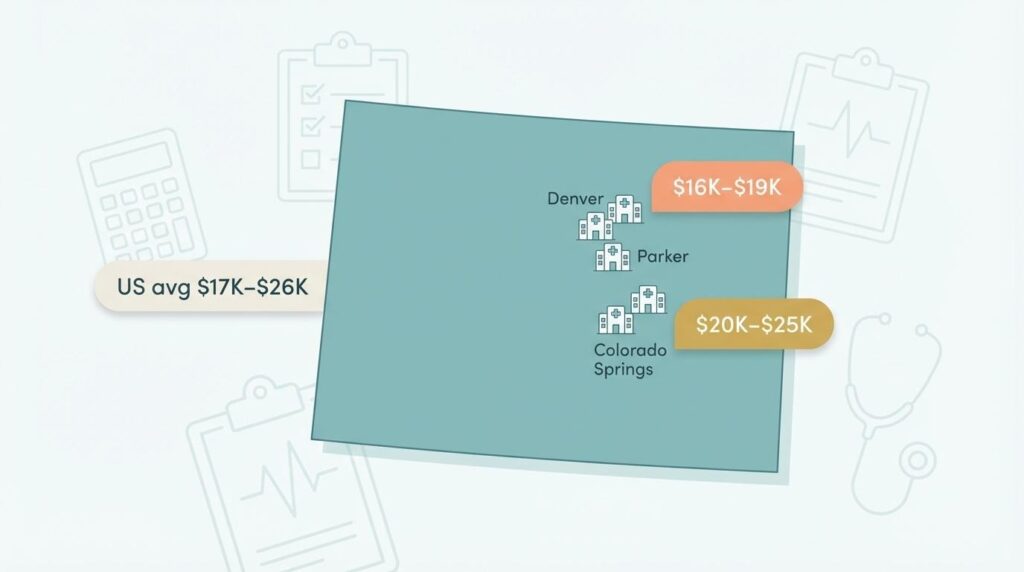
Most Colorado bariatric clinics charge between $16,000 and $19,000 for self-pay gastric bypass in 2025, slightly below typical U.S. prices.
Between August and November 2024, we captured published self-pay Roux-en-Y gastric bypass prices from five MBSAQIP-accredited programs in Denver, Lone Tree, Parker, and Colorado Springs. When a hospital listed only a surgeon fee or facility charge, we phoned the billing office and reviewed de-identified patient invoices to fill the gaps.
Each clinic then earned a composite score based on five weighted signals:
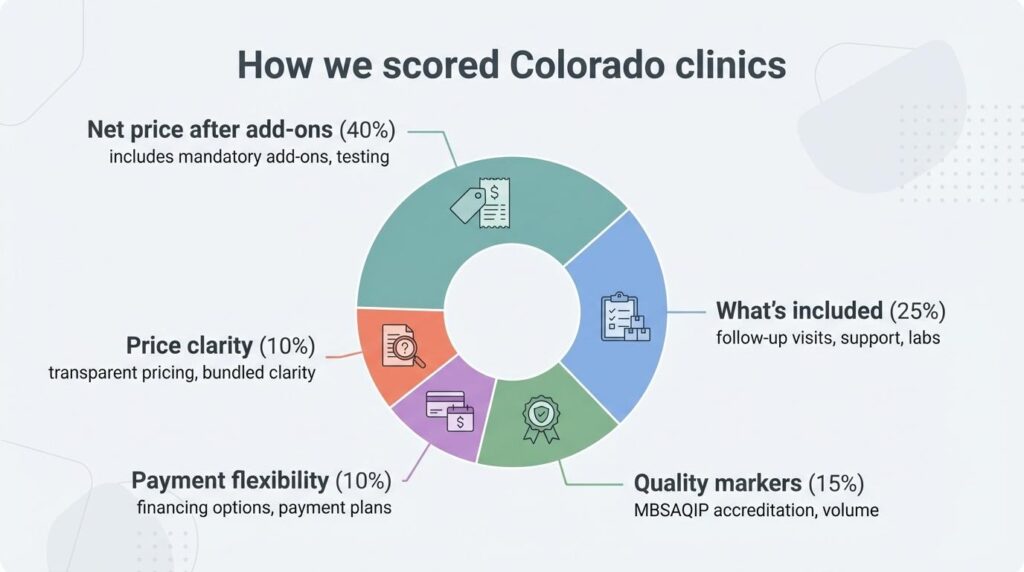
Our scoring framework balances net price, what’s included, quality markers, payment flexibility, and price clarity for each Colorado bariatric clinic.
- Net price after required add-ons (40 percent): the headline fee plus must-have consults or tests.
- What’s included (25 percent): hospital nights, anesthesia, dietitian and psychology visits, and follow-up care.
- Quality markers (15 percent): current MBSAQIP status and surgeon case volume.
- Payment flexibility (10 percent): from broad insurance contracts to zero-interest plans.
- Price clarity (10 percent): how quickly a cash buyer can verify the real figure.
Programs lost points if a low sticker concealed mandatory extras, and they gained points when a slightly higher fee bundled services like three-month nutrition coaching.
One published breakdown from Bariatric & Metabolic Center of Colorado shows that an $18,650 gastric bypass cash package can include preoperative consults, psychological and dietary evaluations, hospital fees for up to three nights, and three months of outpatient follow-up.
Using that kind of all-inclusive package as a reference point helps you see when a “cheap” quote will actually cost more once you add in classes, clearances, and post-op visits.
Finally, we compared our calculated “all-in” totals with real patient explanations of benefits and forum bill snapshots to be sure the numbers reflect what people actually pay, not charge-master list prices.
That scoring framework powers the clinic rankings you’ll see next.
Why prices swing: five forces that move Colorado’s bottom line
Gastric bypass surgery bills vary widely. Five factors explain why Denver Health’s package sits around $15,920 while a Colorado Springs hospital may quote more than $20,000.
1. Facility model. Public hospitals negotiate system-wide rates, so Denver Health can bundle two inpatient nights, anesthesia, and surgeon fees for $15,920. Private centers treat fewer patients and add concierge touches; BMCC in Parker lists an all-inclusive $18,650 package that supports smaller caseloads and extra coaching.
2. What “all-inclusive” covers. Denver Health itemizes about $1,621 for consults and lab work, while BMCC folds those visits into its headline price. A quote that looks cheaper can grow once you add dietitian, psychology, or extra-night fees.
3. Market competition. The Denver metro hosts several high-volume programs, keeping self-pay packages below $19,000. Farther south, fewer providers mean wider margins; recent Penrose–St. Francis estimates cluster in the low $20,000s.
4. Insurance dynamics. Clinics discount cash rates because they bill insurers more than $30,000 and accept a contracted cut. Senate Bill 24-054, introduced in 2025, would require Colorado insurers to cover bariatric surgery, which could shrink today’s cash-pay menu if enacted.
5. Financing friction. A center that offers zero-interest financing lowers the entry barrier even when its sticker matches a rival’s. Easy monthly terms often tip the decision when two quotes differ by only a few hundred dollars.
Keep these levers in mind as we compare Colorado’s best-value programs next; the headline fee is only the opening bid, and real value hides in the details.
Colorado’s best-value gastric bypass clinics
1. Denver Health Bariatric Surgery Center: wallet-friendly without cutting corners
Denver Health posts Colorado’s lowest published self-pay Roux-en-Y price at $15,920. The bundle includes surgeon and anesthesia fees, operating-room charges, and up to two inpatient nights according to Denver Health’s published self-pay list. Plan on about $1,621 more for consults, dietitian visits, psychology clearance, labs, and follow-up tests, bringing the realistic cash total to roughly $17,500. This total remains below the private-clinic average.
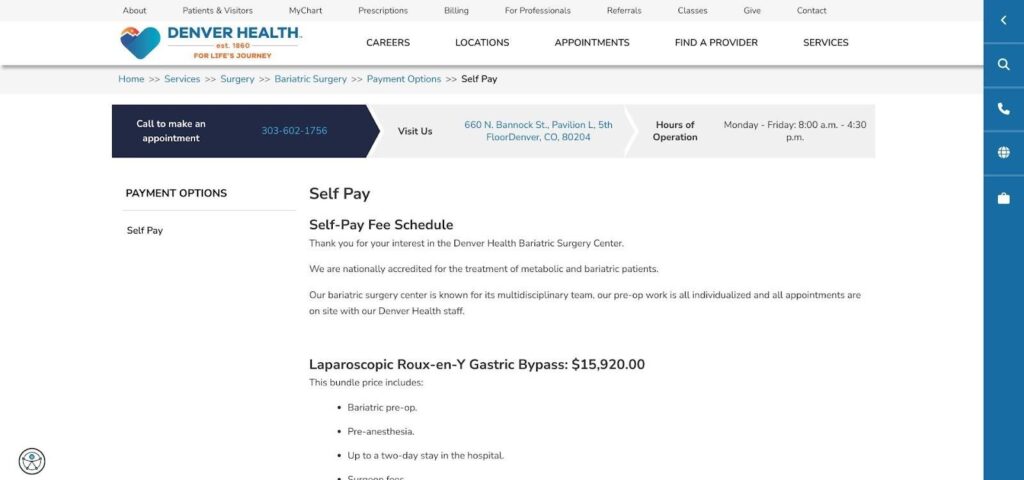
Denver Health’s official bariatric self-pay page supports its position as Colorado’s lowest advertised cash-price option for Roux-en-Y gastric bypass.
Why the low cost? As Denver’s safety-net hospital, the system negotiates wholesale rates and passes the savings to cash-pay patients. The package also covers 90 days of routine follow-ups, so most early-recovery visits won’t trigger surprise invoices.
Quality stays high. The program holds continuous MBSAQIP accreditation and appeared on Newsweek’s 2025 “America’s Best Weight-Loss Clinics & Centers” list.
Trade-offs exist. High demand can push surgery dates several weeks later than at private competitors, and payment is due up front; financing is limited to hospital payment plans with credit checks.
If you’re willing to follow Denver Health’s structured pre-op checklist, you’ll spend the least out of pocket in Colorado while still operating at a nationally recognized, fully accredited center.
2. Bariatric & Metabolic Center of Colorado: all-inclusive peace of mind for $18,650
BMCC, an MBSAQIP Comprehensive Center of Excellence where BMCC weight loss surgery patients routinely drop 100–200 pounds, posts a transparent self-pay price of $18,650 for laparoscopic Roux-en-Y gastric bypass surgery. The fee covers surgeon and anesthesia services, operating-room time, up to three hospital nights, pre-op education, and three months of follow-up care.
The only typical add-on is a surgical-assistant charge that averages $450, bringing the top-end cash total to about $19,100. Because nutrition, psychology, and support-group visits are already included, most patients won’t see surprise invoices.

Bariatric & Metabolic Center of Colorado publishes a dedicated bariatric surgery cost page, reflecting its transparent $18,650 all-inclusive cash package.
Quality matches the price. BMCC operates inside an MBSAQIP-accredited Center of Excellence, and lead surgeon Dr. Joshua Long has performed more than 1,000 bariatric cases with low complication rates.
Coverage is broad. The clinic contracts with major private insurers, Medicare, and, when criteria are met, Colorado Medicaid. Self-pay patients can finance the balance through CareCredit or partner lenders, and cash scheduling typically takes four to six weeks.
Choose BMCC if you want a single check that covers nearly everything, a mid-teens price point, and hands-on guidance from an experienced surgical team.
3. Colorado Bariatric Surgery Institute: robotic precision at a competitive $18,200
Colorado Bariatric Surgery Institute (CBSI) in Lone Tree lists a self-pay $18,200 package for robotic Roux-en-Y gastric bypass surgery. The price covers surgeon and anesthesia fees, a Center of Excellence hospital stay for up to two nights, and unlimited dietitian visits plus support-group access during the first 90 days.
Robotic assistance with the Intuitive Da Vinci system is included at no extra cost, a perk rarely bundled at this price point. Diagnostic tests and any night beyond day two are billed separately.

Robotic-assisted gastric bypass at centers like CBSI combines minimally invasive technique with high-precision instrumentation, often at a competitive self-pay price.
Coverage logistics are simple. A free benefits check confirms insurance eligibility within 24 hours, and self-pay patients can finance the balance through CareCredit or partner lenders. Payment is due seven days before surgery.
CBSI holds continuous MBSAQIP accreditation, and its surgical team completes many robot-assisted bariatric cases each year, allowing most cash patients to move from consult to operating room in about six weeks.
Choose CBSI if you value cutting-edge robotic technique, a comprehensive follow-up plan, and transparent pricing that stays below nineteen thousand dollars.
4. HCA HealthONE Denver Center for Weight Loss Surgery: star surgeons, itemized pricing
At Rose Medical Center, self-pay gastric bypass surgery is billed à la carte. The surgeon’s professional fee is $6,000, and combined hospital plus anesthesia charges add about $15,000, so most patients spend roughly $21,000 out of pocket.
That higher cost buys big-hospital capacity: on-site ICU support, multiple fellowship-trained surgeons led by Dr. Michael Snyder, and a bariatric nursing staff available around the clock. Patients with complicated medical histories, such as severe cardiac disease or very high BMI, often choose Rose for its ability to handle unexpected turns in the operating room.
Speed is another draw. The center’s FastTrack pathway lets cash-pay patients skip insurance paperwork and schedule surgery in as little as four weeks once clearances are complete.
Payment can be spread over time through HCA’s financing portal; interest rates vary with credit score, so compare options before signing.
Pick Rose Medical if you want a high-volume surgical team, full tertiary-care resources, and an accelerated timeline, and you are comfortable with Denver’s premium price tag.
5. Penrose-St. Francis Weight Loss Center: southern Colorado’s hometown choice
Penrose-St. Francis in Colorado Springs doesn’t publish a bundled self-pay price online, but phone quotes and the hospital estimator place gastric bypass surgery between $20,000 and $25,000. The higher figure reflects geography; with fewer bariatric programs south of Denver, competition is lighter and rates stay elevated.
What do you gain for the extra cost? Convenience. All pre-op testing, surgery, and follow-ups happen on the same campus, sparing you a 140-mile round-trip to Denver. Tricare often refers patients from Fort Carson and the U.S. Air Force Academy, so military families can keep care local.
Quality remains strong. Penrose holds continuous MBSAQIP accreditation, and its surgeons perform several hundred bariatric cases each year. A monthly support-group calendar and optional spiritual-care services add holistic touches some patients value.
Financing matches other large systems: CareCredit, in-house payment plans, and income-based charity discounts through CommonSpirit’s assistance program. Penrose suits patients who prize proximity and full-service hospital resources over the lower cash prices available farther north.
Colorado cost landscape at a glance
| Clinic | Cash price* | Core inclusions | Insurance and financing | Best suited for |
| Denver Health | $15,920 base / $17,500 with required pre-op tests | Surgeon, anesthesia, two nights, 90-day follow-up | Medicaid, Medicare, most private plans; hospital payment plans | Lowest out-of-pocket cost at a public-hospital safety net |
| BMCC (Parker) | $18,650 all-in + $450 assistant fee | Surgeon, anesthesia, up to three nights, classes, three-month follow-up | Broad private insurance, Medicare; CareCredit | One-check simplicity and concierge-style coaching |
| CBSI (Lone Tree) | $18,200 all-in | Robotic surgery, two nights, unlimited dietitian and groups (90 days) | Free benefits check; CareCredit; bank loans | Tech-focused patients wanting extensive support |
| HCA / Rose (Denver) | ≈ $21,000 itemized | $6,000 surgeon fee plus hospital and anesthesia | FastTrack self-pay; HCA financing portal | Complex cases, ICU backup, accelerated scheduling |
| Penrose-St. Francis (Colorado Springs) | $20,000–$25,000 estimate | Full hospital package with local follow-up | Tricare, private plans, CareCredit, charity discounts | Southern Colorado residents prioritizing proximity |
*Prices reflect late-2024 self-pay quotes or recent patient invoices. Always confirm the current rate and exactly what’s bundled before committing.
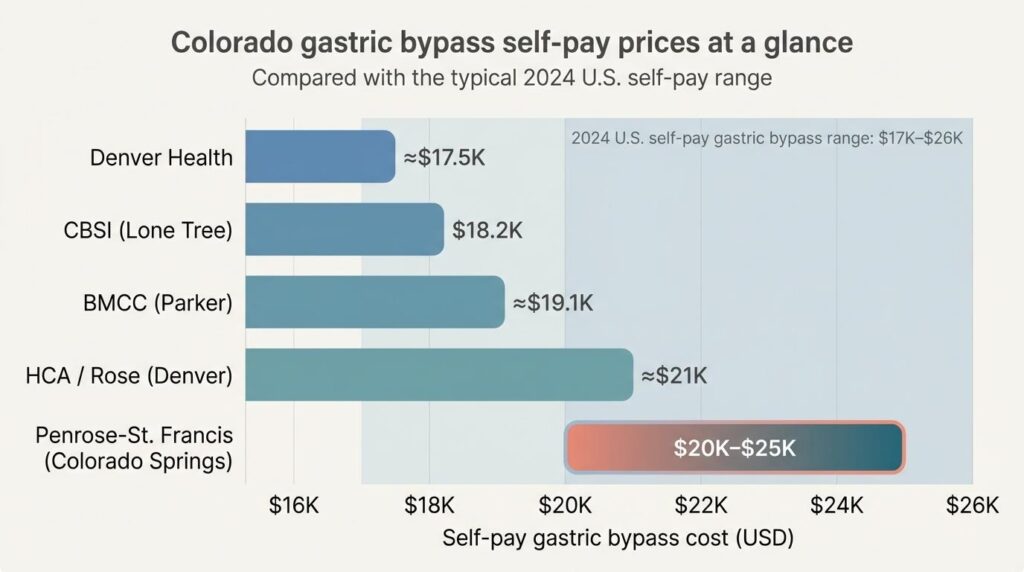
This chart shows how Denver Health, BMCC, CBSI, Rose, and Penrose-St. Francis compare on typical self-pay gastric bypass prices versus national norms.
Key points:
- Denver Health remains the lowest-cost path once you add mandatory clearances.
- BMCC and CBSI cluster just under nineteen thousand dollars while including nearly every service.
- Rose Medical and Penrose cost more but trade price for either flagship resources (Rose) or hometown convenience (Penrose).
Your top questions, answered
Does insurance cover gastric bypass surgery in Colorado?
Yes. Most employer and marketplace plans cover bariatric surgery when medical criteria are met. Health First Colorado (Medicaid) and Medicare follow national guidelines. Ask the clinic for a free benefits check; approval depends on BMI and related health issues and may require three to six months of supervised dieting.
What will I pay if my insurance approves surgery?
Expect to cover your annual deductible plus coinsurance. For example, with a $3,000 deductible and 20 percent coinsurance, a $25,000 claim would cost about $7,000 out of pocket after the deductible is met.
How can I finance self-pay costs?
All five clinics accept CareCredit. Cash patients can split the balance over six to 18 months interest-free if they qualify, or extend to 60 months at 14 to 17 percent APR. Hospital payment plans are interest-free but usually require 30 to 50 percent down.
Are Colorado prices higher than other states?
Not really. Self-pay gastric bypass quotes in Colorado range from $16,000 to $25,000, sitting squarely inside the national $17,000 to $26,000 window reported in 2024 cost surveys. Coastal metros such as San Francisco and New York often exceed $25,000, while some southern programs advertise rates under $18,000 but may lack MBSAQIP accreditation.
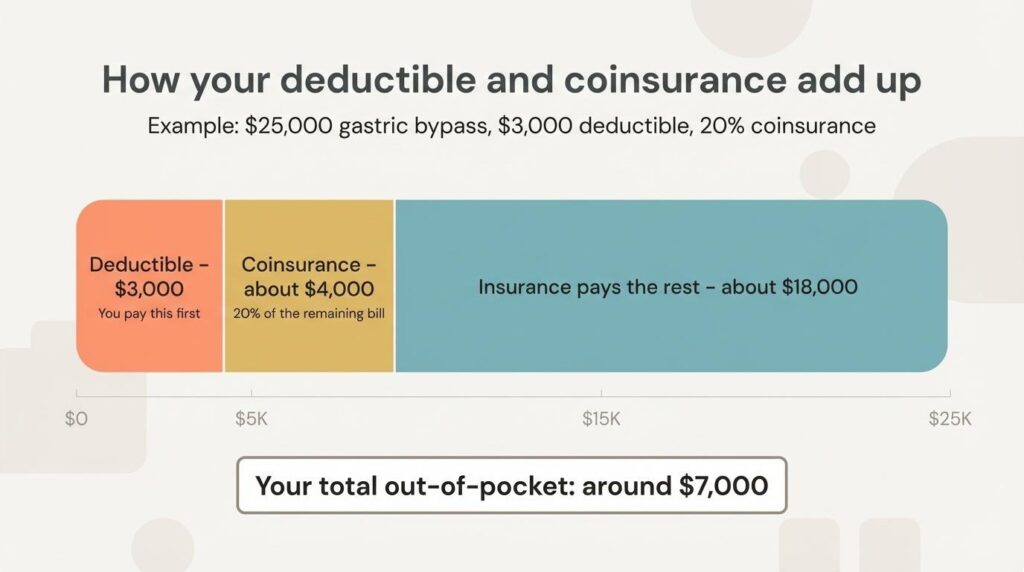
Deductible and coinsurance work together: on a $25,000 gastric bypass claim with a $3,000 deductible and 20% coinsurance, you’ll typically pay around $7,000 out of pocket.
Will new legislation lower my cost?
Possibly. Senate Bill 25-048, passed in June 2025, requires large-group health plans to cover bariatric surgery starting January 1, 2027. If your employer offers a large-group policy, the new rule could shift you from cash pay to deductible-and-coinsurance costs once the mandate takes effect.
How soon can I get on the OR schedule?
Private clinics report that self-pay patients can move from consult to surgery in four to six weeks because no insurance approval is required. At Denver Health, where demand is higher and many patients use Medicaid, wait times average eight to 12 weeks once clearances are complete.
What hidden fees deserve attention?
- Pre-op clearances: Denver Health itemizes about $1,621 for consults, labs, and dietitian and psychology visits that are not in its $15,920 surgical bundle. BMCC and CBSI fold those services into the headline price.
- Extra hospital nights: Most packages cover one or two nights; an additional night can add $1,000 to $2,500. Ask for the per-diem rate in writing.
- Post-op follow-ups beyond the bundle: Private clinics include 60 to 90 days of visits; after that, each nutrition or surgeon visit may cost $75 to $150. Verify how many visits are prepaid.
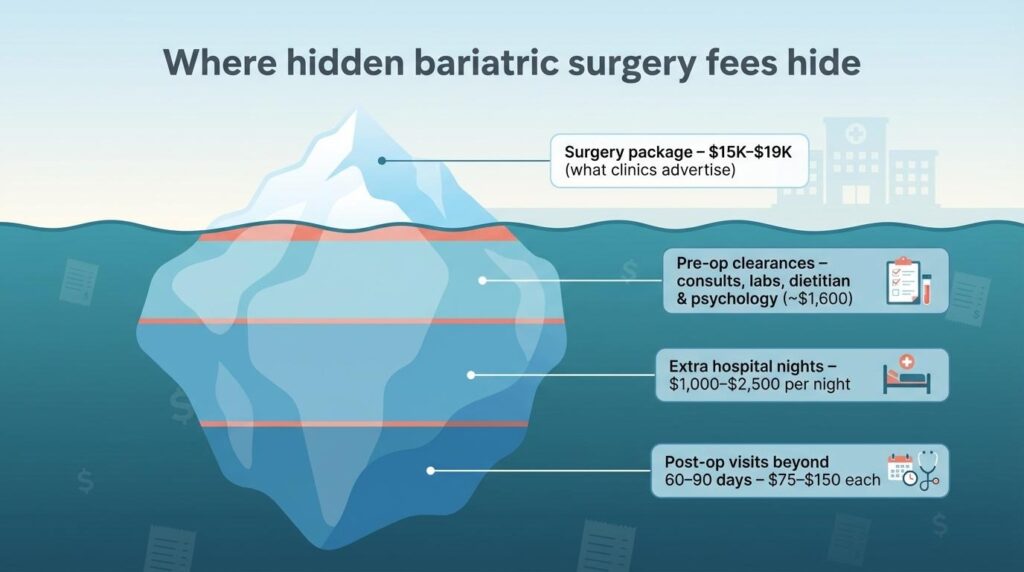
Most gastric bypass quotes only show the tip of the iceberg—pre-op clearances, extra hospital nights, and post-op visits can significantly increase your true out-of-pocket cost.
Request a written global fee that spells out what triggers add-on charges and the exact dollar amount for each scenario.
Conclusion
Use these quick answers as a launch pad, then confirm specifics with your chosen clinic and insurance carrier.

Kinky Cubes is an intimacy product, marketed around couples who want to explore something different. Generally, products marketed around couples promise to add something unique, but it is not necessary that they are worth trying. Kinky Cubes are gummies; whether they are worth it or not primarily depends on factors like ingredients, intended effects, individual expectations, safety considerations, and more.
In this article, we will explore details around Kinky Cubes, so keep reading.
What Are Kinky Cubes?
Kinky Cubes are special types of gummies designed for couples and adults interested in elevating their intimacy experience. They are different from ordinary gummies and marketed around specific effects, which makes it important to refer to their ingredient list, recommended serving, manufacturer information, and claims.
What Are They Supposed to Do?
The primary goal of Kinky Cubes is to enhance the intimacy experience, mood, and sexual wellness. These are their primary marketing objectives, but their ultimate results may vary from person to person, depending on factors like age, medications, general health, stress, sleep, expectations, and more.
Ingredients Matter
Checking ingredients is the most basic thing you should do when purchasing Kinky Cubes.
Look for:
- The complete list of active ingredients
- The amount of each ingredient per serving
- Recommended serving size
- Allergens
- Other inactive ingredients
- Manufacturer information
- Warnings and usage instructions
This step is crucial to ensure your safety and to understand what you will consume in the name of Kinky Cubes. It is also helpful in determining the possible effects on your body.
Are Kinky Cubes Effective?
Whether Kinky Cubes are effective or not depends on several factors. There is no universal answer for all. It is a product designed to elevate mood, energy, sexual desire, and physical response, and it won’t affect everyone the same. However, companies may claim super benefits of using this product based on a few or single ingredients. Still, you have to check the cumulative effect of all ingredients and their formulation before deciding to consume them.
Are Kinky Cubes Safe?
Generally, products like Kinky Cubes are not considered safe because they are artificial products meant to elevate a natural feeling that should generate naturally in your body. Taking products like Kinky Cubes is like changing your body. You technically behave/perform beyond your limits, which is not considered healthy and safe.
Also, if you still want to consume them, then you should definitely consult a well-qualified and experienced doctor before starting to take them.
What Should You Consider Before Buying?
Before you decide whether you should buy Kinky Cubes or not, you should ask yourself these five questions:
- What exactly is in the product?
- Are the claims realistic?
- Do you need the product?
- Could it interact with something you already take?
- What is the reason behind why I am considering buying it?
Answering these questions will help you make an informed decision.
Frequently Asked Questions (FAQs)
Are Kinky Cubes Designed for Women?
Kinky Cubes are marketed as a couple’s product, designed to elevate sexual desires and improve performance. Generally, they also include women, but you should read the description to better understand the user base.
Do Kinky Cubes Guarantee a Specific Effect?
No, Kinky Cubes are a mere supplement. They don’t guarantee any specific effect because human bodies are different, and these types of products don’t have the same impact on all people.
Should I Check the Ingredients Before Using Kinky Cubes?
Absolutely, you should definitely check ingredient lists before using any product, especially with products like Kinky Cubes; you should be extra cautious.
Conclusion
Kinky Cubes is a specific type of gummy designed to improve your sexual performance and bring uniqueness to intimacy. These types of products target your vulnerabilities and want to exploit them. They target the couple’s weak areas and try to monetize them. In this article, we discussed Kinky Cubes in detail and shared relevant information with you. In the end, we hope you enjoy reading this post and find it informative. If so, then do share this post with others as well.

Managing healthcare staff is a complex task. It is not limited to providing them with a weekly timetable. There are several things to take care of, such as patient demand, employee availability, skill requirements, overtime, open shifts, and more. To solve such problems, many advanced digital solutions are present in the market, and Smart Square HMH is one of them. This term refers to Hackensack Meridian Health’s use of Smart Square. In this article, we will discuss it in detail, so keep reading.
What Is Smart Square HMH?
Smart Square is primarily known as healthcare workforce management software developed for organizations that require advanced employee-management solutions. Hackensack Meridian Health adopted the platform to resolve issues related to workforce management across its healthcare operations.
Why Healthcare Workforce Management Is Difficult
Healthcare staffing is different from handling employees in a non-medical organization. It involves several unique challenges, such as patient volumes changing at any time, healthcare departments needing skilled staff, one employee generally not being able to work in other departments, and more.
To resolve these issues, hospitals usually follow these techniques:
Predictive Scheduling
Predictive scheduling can be done using digital tools that can forecast patient volume and staffing requirements up to 120 days in advance. It is a unique Smart Square feature. This feature helps hospitals follow a proactive approach, instead of a reactive one, which allows them to arrange staff in advance before potential shortages happen.
Open Shift Management
Open shifts are about helping organizations fill staffing gaps. This tool helps you communicate and manage available shifts to fill a significant portion initially, reducing last-minute staffing decisions. It is also beneficial for employees; they can see the available shifts and ask their managers to allow them as per their requirements.
Enterprise Workforce Visibility
If every department of the organization starts working in isolation, then managing the staffing requirements would become extremely difficult. Smart Square provides a centralized workforce view that allows leaders to check staffing availability across departments and make arrangements accordingly.
HMH’s Measurable Results
Hackensack Meridian Health is an example of successful Smart Square implementation. As per symplr’s published case study, HMH was struggling with FTE leakage, i.e., hours employees were not working despite being allotted full-time-equivalent requirements. After implementing Smart Square solutions, the organization reported a 6.5% reduction in FTE leakage and monetary savings of $616,000 as compared to the previous year.
How Smart Square Can Benefit Healthcare Organizations
The primary advantages of Smart Square are as follows:
- Better visibility into staffing requirements
- More proactive workforce planning
- Easier management of open shifts
- Greater employee control through self-scheduling
- Reduced dependence on last-minute staffing decisions
- Better monitoring of labor utilization
- More informed workforce decisions
These benefits are not automatic; they depend on how an organization implements the system and makes arrangements accordingly.
The Future of Healthcare Workforce Management
The future of healthcare workforce management is data-oriented, which includes using digital devices to predict future demand accurately and make arrangements accordingly. Today’s modern tools are filled with features like forecasting, automation, analytics, self-scheduling, integrations with healthcare systems, and more. These features help hospitals manage their staffing needs and optimal utilization of resources.
Frequently Asked Questions
What is Smart Square HMH?
Smart Square HMH primarily refers to the implementation of Smart Square in Hackensack Meridian Health for managing the healthcare workforce and staff requirements.
Is Smart Square Owned or Developed by Hackensack Meridian Health?
No, as per available details, Smart Square is neither owned nor developed by Hackensack Meridian Health. HMH is a user of this technology.
How Did Smart Square Benefit Hackensack Meridian Health?
As per symplr’s HMH case study, they saved around $616,000 in a year as compared to the previous year due to a 6.5% reduction in FTE.
Conclusion
Smart Square HMH is an example of how you can use modern digital solutions to solve your problems and also save costs due to optimal utilization of resources. In this article, we shared publicly available details with you and requested you to kindly verify all claims and terms and conditions before adopting it. In the end, we hope that you like reading this post and will share it with others as well.

Congestive heart failure is not something which will only get worse, and you can’t overcome this disease. A diagnosis of heart failure can improve with the right treatment and cause improvement in heart functionality.
However, it requires a long-term treatment plan and consistent efforts towards improving heart health. Let’s discuss in detail whether it can be reversed or not, and other details related to this topic, so keep reading.
What Is Congestive Heart Failure?
Heart failure refers to a condition in which the heart cannot pump enough blood to meet the body’s needs. The term “congestive” means fluid buildup due to improper functioning of the heart, which results in fluid collecting in the lungs, legs, ankles, or other body parts. Conditions like coronary artery disease, high blood pressure, heart valve problems, cardiomyopathy, and previous heart damage are among the primary reasons behind heart failure.
Can Heart Failure Be Reversed?
Yes, it can be reversed, but not all forms of heart failure can be reversed; only a few of them can be, when the underlying cause is identified and treated. In general cases, heart damage is permanent. With consistent treatment, it can reduce hospitalization, but complete removal is rare.
What Can Cause Heart Failure to Improve?
- Treating High Blood Pressure: Uncontrolled high blood pressure is directly linked to an increased risk of heart failure; it is important to control it.
- Treating Heart Valve Problems: Some valve disorders affect the heart’s ability to pump or fill properly. To resolve it, an appropriate valve repair or replacement is required.
- Treating Abnormal Heart Rhythms: Consistent rapid heart rhythms can weaken the heart in the long run. It is important to treat them in a timely manner to avoid the risk of negative consequences.
- Treating Coronary Artery Disease: When coronary arteries are blocked or narrowed for any reason, they can reduce blood flow to the heart muscle; that’s why appropriate treatment is required to prevent additional damage and improve heart function.
Can Lifestyle Changes Help?
Absolutely, lifestyle changes are integral to managing heart health. Generally, these changes help patients the most:
- Following a heart-healthy eating pattern
- Limiting sodium when advised
- Maintaining a healthy weight
- Staying physically active at an appropriate level
- Avoiding smoking
- Limiting alcohol
- Taking prescribed medications consistently
- Monitoring symptoms and fluid retention
Medications and Heart Failure
Modern treatments heavily depend on medications. Depending on the type of heart failure, doctors may prescribe medications to reduce strain on the heart, control blood pressure, remove excess fluid, or improve cardiovascular outcomes.
In some people, certain devices are also used to control abnormal rhythms or treat significant structural heart problems.
Can a Weak Heart Become Stronger?
After successful treatment of the underlying heart problem, the first positive outcome is the improvement of heart health or stoppage of further loss. However, it doesn’t mean that you stop the treatment; the underlying condition can return if medications are discontinued. Timely follow-ups are also recommended for better heart health.
When Is Heart Failure an Emergency?
If you are experiencing heart failure with severe difficulty breathing, chest pain, fainting, severe weakness, confusion, or other rapidly worsening symptoms, then instead of waiting for the next doctor’s appointment, you should rush to the hospital seeking emergency medical care.
Frequently Asked Questions (FAQs)
Is Congestive Heart Failure Completely Curable?
Generally, it is not completely curable, but its symptoms can be reduced substantially with the improvement of heart health due to the right treatment.
Can Ejection Fraction Improve After Heart Failure?
Yes, in some cases, significant improvement has been seen after treatment. However, you shouldn’t stop visiting doctors for further health updates.
Can Lifestyle Changes Reverse Heart Failure?
Lifestyle changes are an integral part of heart failure treatment, but alone, they can’t reverse heart failure; medications and other health care services also play a crucial role in the overall treatment.
Conclusion
Congestive heart failure is reversible in some cases with proper treatment, lifestyle changes, healthy diet, and guided exercise. However, even after reversal, you shouldn’t stop visiting the hospital for a checkup. Even a small mistake can turn deadly. Heart health is crucial, and this article discusses an important topic around it. In the end, we hope you enjoy reading this post and find it informative. If so, then do share this post with others as well.


How Developers Can Use Guest Posts to Build Their Professional Presence

Kinky Cubes Review: Are These Couples Gummies Worth Considering?

Staying Updated on the Latest Game Releases and Industry News
Best Kickass Proxy List 2024 – 100% Working to Unblock to Access

Banging The Underdog Incident 2022

TamilRockers Proxy 2025: 20+ Working Links, Mirror Sites & VPN Guide
-
Entertainment2 years ago
Best Kickass Proxy List 2024 – 100% Working to Unblock to Access
-
 Lifestyle2 years ago
Banging The Underdog Incident 2022
-
Entertainment2 years ago
TamilRockers Proxy 2025: 20+ Working Links, Mirror Sites & VPN Guide
-

 Fashion2 years ago
Trendy Midi Dresses for Casual Wear: Hair Care Tips Included!
-
 Entertainment2 years ago
TamilMV Proxy Sites List 2025 – How to Unblock TamilMV Safely?
-

 Piano2 years ago
How Online Piano Lessons Can Enhance Your Musical Skills?
-
 Entertainment2 years ago
Pirate Bay Proxy List 2025: Access The Pirate Bay Safely
-

 Technology2 years ago
SSIS 469 – Detailed Guide to Understand The Features and Benefits